
Invisalign vs. Braces in Houston: Which Is Right for You?
Invisalign may suit you if your crowding or spacing is mild to moderate, you want a less visible option, and you can wear aligners 20 to 22 hours a day. Braces may be the better fit for more complex tooth movements or if you do not want to manage removable aligners. When comparing Invisalign vs. braces in Houston, Invisalign often costs about $3,000 to $8,000, while braces often cost about $2,500 to $6,000. Your treatment time and price will depend on your teeth, your goals, and your insurance.
I’m Gustavo Salas, DDS, MS, a Houston-area orthodontist with more than 18 years of experience treating patients. My orthodontic training and clinical work inform this Invisalign vs braces Houston guide, starting with the choices that matter most: treatment needs, daily habits, and budget.
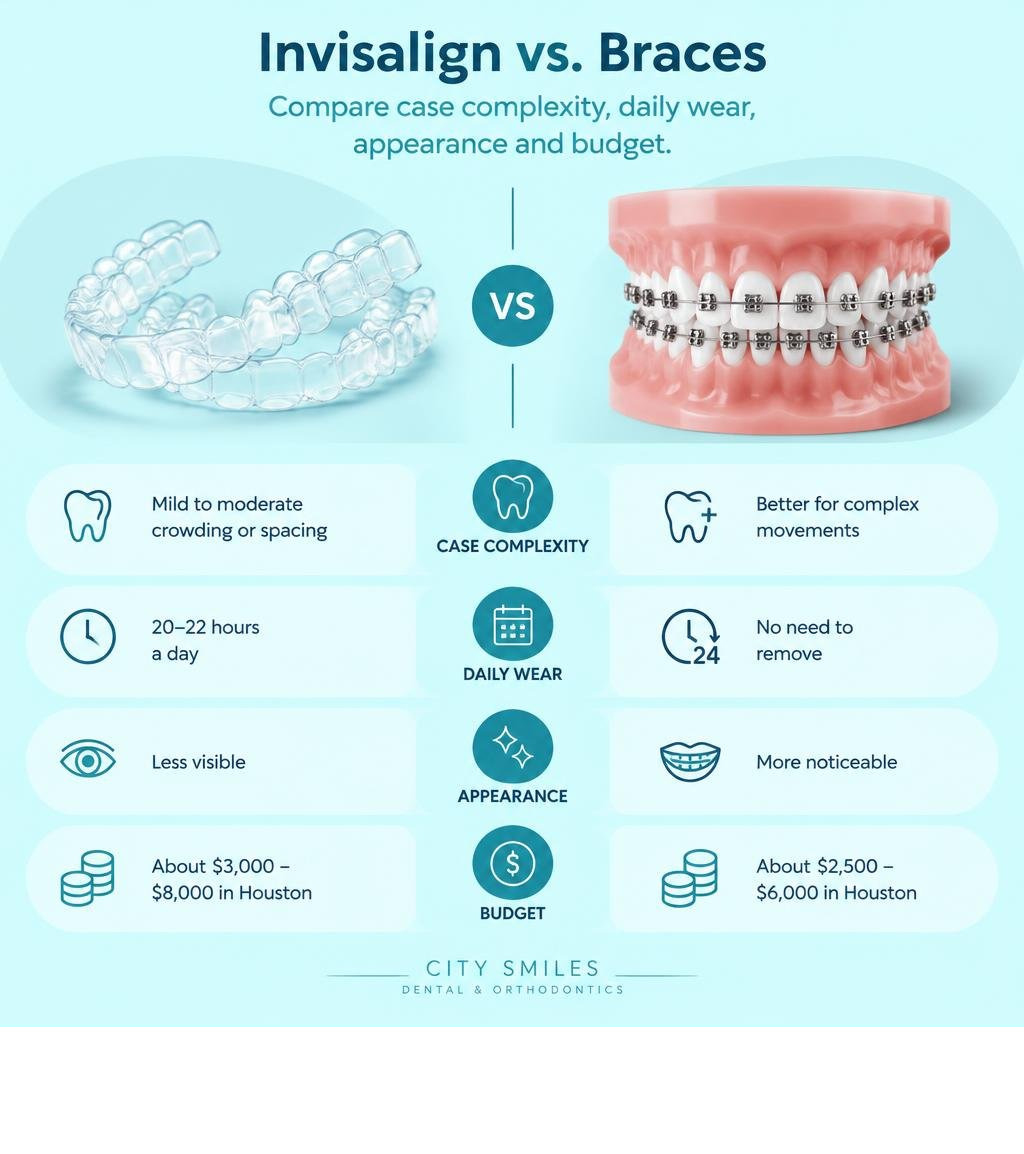
Invisalign vs braces Houston: key differences and treatment fit
Invisalign uses a series of custom-made, clear plastic aligners to move teeth gradually. You take them out to eat, drink anything besides water, brush, and floss. Traditional braces use brackets attached to the teeth and a wire that applies steady pressure. Because braces stay in place, they work around the clock without relying on you to remember to put them back in.
| Consideration | Invisalign | Traditional braces |
|---|---|---|
| Appearance | Clear trays are less noticeable, though they may be visible up close. | Brackets and wires are visible. |
| Wear | Usually 20 to 22 hours each day; remove for meals and oral care. | Fixed in place and worn continuously. |
| Maintenance | Clean the aligners and teeth; store trays safely when removed. | Brush and floss carefully around brackets and wires. |
| Eating | Remove aligners before eating; avoid eating with them in. | Avoid hard, sticky, and chewy foods that can damage braces. |
| Treatment time | Often around 12 to 18 months, depending on the case. | Often around 18 to 24 months, depending on the case. |
| Best suited to | Many mild to moderate alignment problems, when aligners are worn as directed. | A broad range of cases, including many complex tooth movements. |
These are general patterns, not guarantees. Your orthodontist must assess your bite and teeth before recommending a treatment. For a general overview of how the options compare, see the American Association of Orthodontists’ comparison of braces and clear aligners.
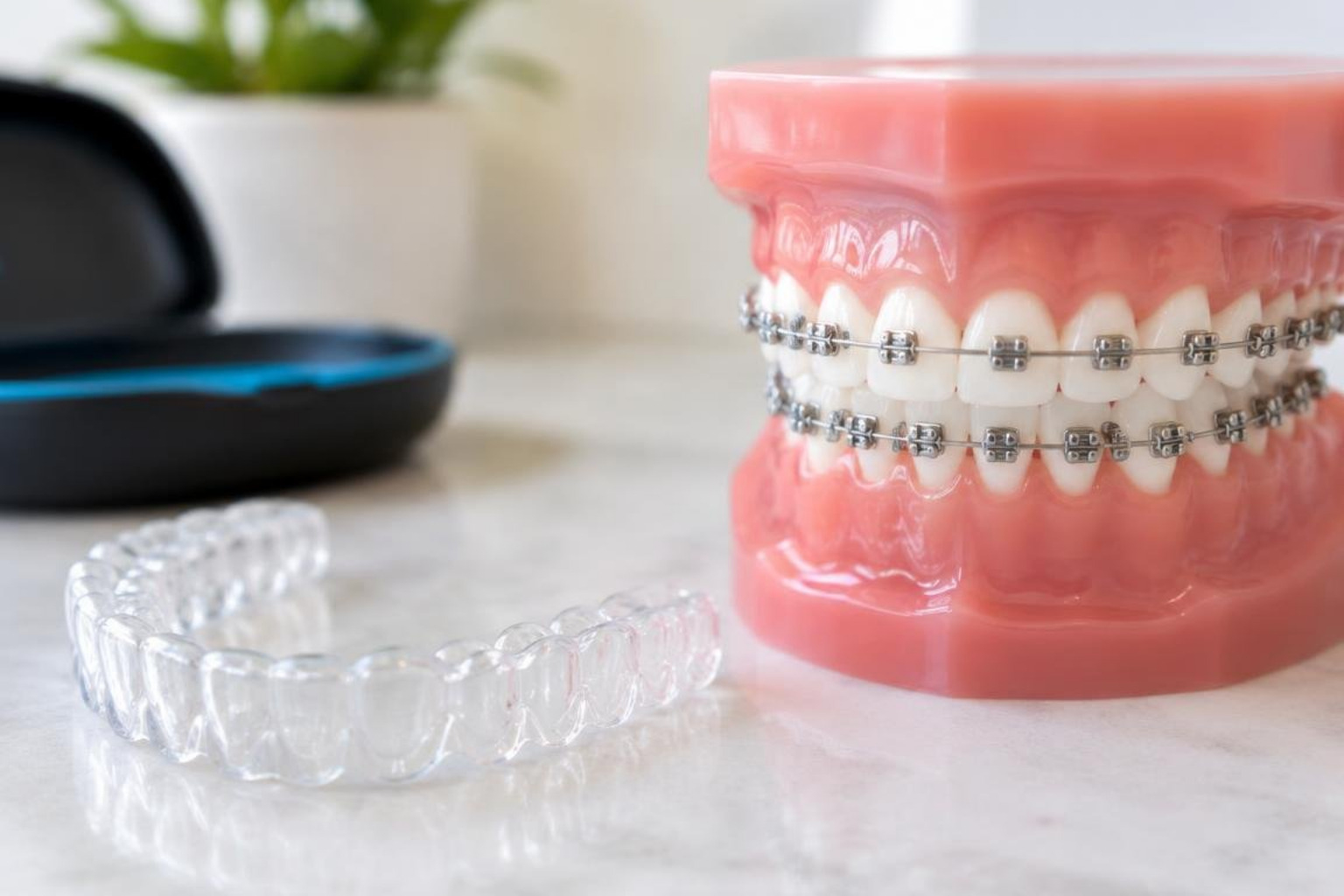
Invisalign vs braces Houston: treatment time and effectiveness
In the estimates provided for Houston, Invisalign treatment averages about 12 to 18 months, while braces often take 18 to 24 months for similar cases. Those ranges are starting points, not a promise that one method will always be faster. The amount and type of tooth movement needed, your treatment goals, and how consistently you follow the plan all affect the timeline.
With Invisalign, wearing trays for 20 to 22 hours a day is essential. Taking them out too often or forgetting to put them back can slow progress. Some patients also need refinement aligners near the end of treatment to fine-tune the result.
Braces do not depend on daily wear-time decisions, but broken brackets, missed visits, or other interruptions can affect progress. Both options can be effective when the treatment is well planned and followed. The best choice is the one that can reliably achieve your specific goals.
A discussion source gives a broad estimate that about 70% of orthodontic patients may be Invisalign candidates. Treat that figure as a general estimate, not a personal prediction: the discussion of braces versus Invisalign does not replace an orthodontic examination.
Invisalign vs braces Houston: which orthodontic issues can each treat?
Invisalign may work well for mild to moderate crowding and spacing. It can also address some bite concerns, depending on the details of the case and the movement required. Since aligners are removable, success depends in part on wearing them as prescribed.
Braces may be preferable for more severe misalignment, complex bite problems, significant tooth rotations, or movements that require precise control, including some vertical movements. This does not mean every complex case automatically needs braces, or that aligners can address every case. The right option depends on an examination and a treatment plan tailored to your teeth.
Houston costs, insurance, and finding an orthodontist
Typical Houston estimates range from $3,000 to $8,000 for Invisalign and $2,500 to $6,000 for traditional braces. Your actual fee may differ depending on case complexity, treatment length, and what is included in the plan. Ask for a written estimate that explains the total cost and any possible additional charges.
| Cost consideration | Invisalign | Traditional braces |
|---|---|---|
| Typical Houston estimate | $3,000 to $8,000 | $2,500 to $6,000 |
| Insurance | May be covered under orthodontic benefits, subject to plan rules. | May be covered under orthodontic benefits, subject to plan rules. |
| Out-of-pocket cost | Depends on your plan allowance, remaining benefits, and payment arrangement. | Depends on your plan allowance, remaining benefits, and payment arrangement. |
What do Invisalign and braces cost in Houston, and does insurance cover them?
Dental insurance may cover either option if your plan includes orthodontic benefits. Coverage varies: some plans have a lifetime orthodontic maximum, age limits, waiting periods, or other restrictions. A lifetime maximum is the total amount the plan will contribute toward orthodontic care over a person’s lifetime, not an annual benefit that resets each year.
Before treatment, check your benefits with your insurer and ask the orthodontic office to help you understand the estimate. Confirm what you may owe, when payments are due, and whether the quoted fee includes records, routine visits, and retainers. Many offices offer payment plans or financing options, but terms vary, so ask about them directly.

How to choose a Houston orthodontist
Look for an orthodontist who can explain both options and why one fits your particular bite, rather than recommending a treatment based only on appearance or price. An orthodontist is a dental specialist with additional training in diagnosing and treating tooth and jaw alignment. You can also ask whether the provider is board-certified and what experience they have treating cases like yours.
At a consultation, ask:
- What specific tooth or bite concerns does the treatment address?
- Why do you recommend Invisalign or braces for my case?
- How long might treatment take, and what could change the timeline?
- What is included in the fee, including follow-ups and retainers?
- How often will visits be needed, and how are urgent concerns handled?
- What happens if aligners are lost or a bracket breaks?
Digital scans and other modern planning tools can help your orthodontist assess your teeth and plan treatment. They are useful parts of care, but the provider’s diagnosis and ongoing supervision matter too. Consider practical access as well: whether appointment times work for your schedule and whether the office is convenient for regular visits in Houston.
Daily life, risks, follow-ups, and retainers
Appearance and comfort are personal. Invisalign trays are less noticeable than braces, but they can feel snug when you start a new set. Braces are visible and may rub against the lips or cheeks, especially soon after placement or an adjustment. Both treatments take some getting used to.
How do lifestyle and maintenance differ?
Invisalign can suit people who want flexibility at meals, but that flexibility comes with a routine. Remove trays before eating, then brush your teeth before putting them back in when possible. Clean the aligners as instructed, and keep them in their case when they are out of your mouth. Wrapping them in a napkin is a reliable way to make them disappear at lunch.
Braces stay in place, so there is no need to track wear time or carry a removable tray. However, food can get caught around brackets and wires. You will need to clean carefully and avoid foods that can break or loosen the hardware, including very hard or sticky items. With either option, regular brushing and flossing help reduce the risk of cavities and gum problems.
A few daily-life considerations can help you decide:
- Sports: Ask your orthodontist about a suitable mouthguard. With braces, a mouthguard can help protect the cheeks and lips from contact with brackets. With aligners, follow your provider’s instructions about whether to remove them during play.
- Speech: Some people have a brief adjustment period with aligners and notice a slight lisp. Braces can also feel unfamiliar at first. Speech usually adapts as you get used to the appliance.
- Houston heat: Heat does not create a major difference in orthodontic treatment, but do not leave aligners in a hot car or near other heat sources. High temperatures can warp them. Stay hydrated, especially outdoors; water is safe to drink with aligners in.
- Lost or damaged appliances: Contact your orthodontist for instructions rather than skipping ahead or improvising. A lost aligner or damaged bracket may affect your treatment schedule.
Both treatments can cause temporary soreness as teeth move. Braces may irritate the cheeks or lips, and aligners may press on the teeth or rub the gums. Keeping teeth clean is important throughout treatment: plaque left around braces or under aligners can contribute to tooth decay, white spots, or gum inflammation. Follow your orthodontist’s cleaning instructions and ask about persistent pain, swelling, or irritation.
What follow-ups and retainers should patients expect?
With Invisalign, you will change aligners according to your orthodontist’s schedule and attend progress checks so the provider can confirm your teeth are moving as planned. With braces, visits are needed to check progress and adjust the wire or appliance. The timing depends on your treatment plan, so ask how often you should expect to come in.
After either treatment, retainers help keep teeth in their new positions. Teeth can shift after orthodontic treatment, so retention is a long-term part of protecting your result. Your orthodontist will explain which retainer is appropriate, when to wear it, and how to care for it. Follow those instructions consistently; finishing active treatment is not the same as being finished with retention.
Frequently asked questions about Invisalign and braces in Houston
What is the average treatment time for Invisalign versus braces?
The typical estimates are 12 to 18 months for Invisalign and 18 to 24 months for braces, but individual timelines vary. Case complexity, treatment goals, attendance, and—in the case of Invisalign—wearing aligners for the prescribed hours can all affect duration.
Is Invisalign suitable for severe orthodontic problems?
Sometimes, but it is not the right fit for every severe or complex problem. Certain rotations, vertical movements, and significant bite corrections may be more predictable with braces. An orthodontist can evaluate the movements your case requires and explain which option is likely to meet your goals.
Does Houston’s climate affect orthodontic treatment?
Houston’s climate does not usually change which treatment works or how long it takes. Heat can damage aligners if they are left in a hot car or exposed to high temperatures, so store them in their case at room temperature. Drink water regularly, particularly during hot weather, and follow your orthodontist’s advice about wearing and cleaning your appliance.
Conclusion
Choosing between Invisalign and braces is a personal decision, but it should start with what your teeth need. We help patients weigh treatment goals, daily routines, appearance, and budget before recommending an option. At City Smiles Dental & Orthodontics, care is personalized and led by board-certified orthodontist Dr. Gustavo Salas, with advanced digital workflows and our in-house GusAligners. To discuss personalized orthodontic care in Houston, contact our team and arrange an evaluation.